



Climate crisis
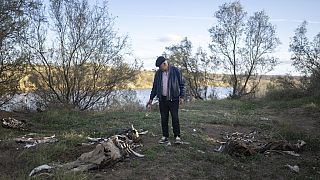
2023 was a record-hot year and stood out with a drying up of water flows and contributed to prolonged droughts in some places.
The World Meteorological Organization WMO released the latest “State of Global Water Resources” report on Monday (Oct. 07).
It notably covers rivers lakes, reservoirs, groundwater, soil moisture, glaciers, and the evaporation of water from land and plants.
"We had never seen such a large area around the world which was under such dry conditions. So from the 33 years of data that we have considered in this report, it was the driest year."
If southern America's renowned Amazon and Lake Titicaca faced widespread drought conditions, other places in Oceania for instance were flooded.
The WMO's chief alerted on erratic hydrological cycles.
"Water is the basis of life in this planet. But it can also be a force of destruction. One of the key findings of these report is that water becomes increasingly unpredictable, what we call an erratic hydrological cycle leading to sudden floods, severe droughts and climate change is one of the causes of these extreme behaviours."
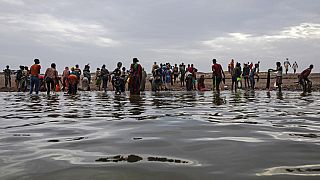
In November 2023, at least 130 people died in the horn of Africa following heavy rains that triggered what aid agencies described as flooding seen only once every 100 years.
The WMO called for improvements in data collection and sharing to help clear up the real picture for water resources and help countries and communities take action in response.




Go to video
DRC: Kinshasa and UN launch humanitarian response plan
01:41
Mozambique expects death toll to rise as search for flood survivors continues
01:58
Prolonged drought in Kenya leaves millions vulnerable
Go to video
More than 640,000 people affected by catastrophic Mozambique floods
00:56
Mozambique: crocodiles appear in towns amid floods
01:00
Malawi launches cholera vaccine rollout